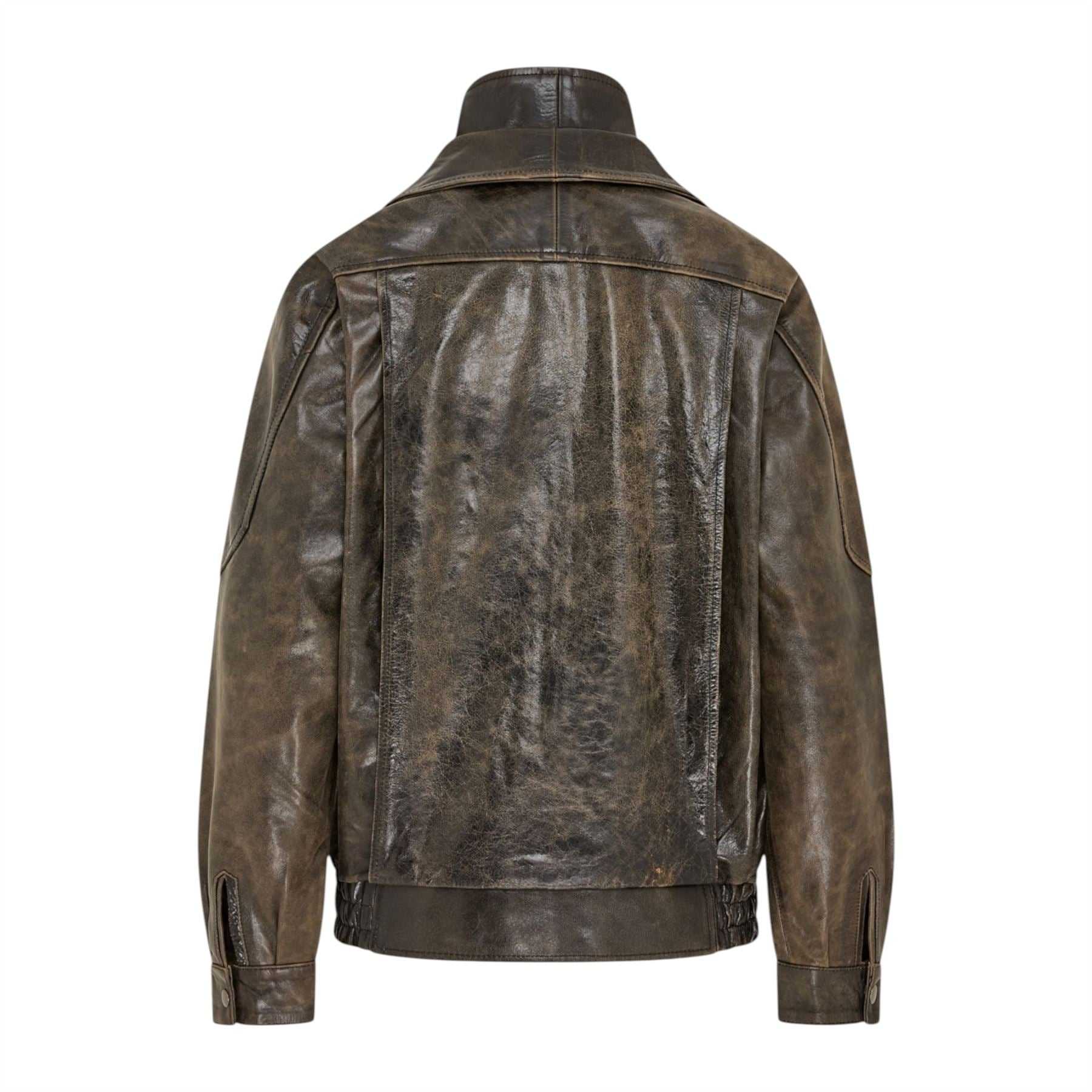
In an era saturated by fast-fashion disposable garments, purchasing an authentic, handcrafted leather jacket remains one of the finest investments a person can make. When crafted from genuine, unadulterated hides, a leather jacket is not an expense—it is a lifelong asset whose cost-per-wear drops to mere pennies over decades of service.
Yet, the modern marketplace is riddled with confusing terminology: “genuine leather”, “vegan leather”, “bonded leather”, “PU”, and “nappa”. Discerning between marketing hype and genuine artisan craftsmanship can feel overwhelming. In this definitive British leather buying masterclass, the master craftsmen at DA Supermart Ltd pull back the curtain to help you evaluate leather grades, hide species, hardware integrity, and real-world value.
1. Decoding the Hierarchy of Leather Grades
Leather is graded based on which layer of the animal hide is utilized and how heavily the grain surface has been altered during tanning:
- Full-Grain Leather (The Gold Standard): This represents the uppermost layer of the hide, including the entire natural grain with all its authentic micro-pores, growth marks, and subtle characteristics. Full-grain leather is never sanded, buffed, or coated with artificial plastics. It is the strongest, most breathable, and develops that coveted rich patina over time.
- Top-Grain Leather (The Luxury Compromise): The outermost surface is gently buffed to remove minor surface blemishes before a light protective finishing coat is applied. It is slightly thinner and more uniform than full-grain, offering supreme softness and excellent stain resistance while retaining true hide durability.
- Split / Genuine Leather (Commercial Tier): Sliced from the lower fibrous layers of the hide after the top grain is split away. It lacks the natural dense grain structure and is often stamped with an artificial textured pattern. While genuine animal hide, it lacks the longevity and breathability of full or top-grain.
- Bonded Leather & Faux PU (Avoid): Bonded leather is composed of pulverized leather scraps glued together with polyurethane adhesives. “Vegan leather” is simply marketing jargon for non-biodegradable fossil-fuel plastic (PVC/polyurethane) that peels, cracks, and flakes into landfill waste within 12 to 24 months.
Explore Our Genuine Leather Range →
2. Hide Types: Lambskin vs. Cowhide vs. Goat & Suede
Each animal hide possesses unique physical properties suited to different lifestyles and aesthetics:
| Hide Type | Tactile Texture | Weight & Thickness | Best Suited For |
|---|---|---|---|
| Lambskin (Nappa) | Velvety, buttery softness; moulds instantly to body contours. | Light to medium (0.7mm – 0.9mm). | Tailored blazers, luxury bombers, evening jackets, fashion-forward streetwear. |
| Bovine Cowhide | Dense, substantial, rugged grain; high abrasion resistance. | Heavy (1.1mm – 1.4mm). | Heritage biker jackets, flight aviators, severe winter coats, motorcycling. |
| Suede / Nubuck | Brushed velvety nap; rich depth of colour and soft tactile feel. | Medium (0.8mm – 1.0mm). | Spring blousons, trucker jackets, smart-casual Mediterranean styling. |
| Goatskin | Distinctive pebbled grain; remarkably durable and naturally water-resistant. | Medium-heavy (0.9mm – 1.1mm). | Military A-2 flight jackets, field jackets, utilitarian outerwear. |
The Longevity Economics: Cost-Per-Wear
A £70 faux leather jacket from a high-street fast-fashion retailer will begin flaking at the collar and elbows within 18 months, requiring replacement every other winter. Conversely, a £180–£250 genuine lambskin or cowhide jacket from DA Supermart Ltd lasts 15 to 20+ years when conditioned properly. Over 500 wears, your cost-per-wear is under 40 pence per outing!
3. Five Quick Tests to Identify Real Leather from Faux
When shopping in stores or evaluating your delivery at home, conduct these five immediate tests:
- The Scent Test: Genuine leather has a rich, earthy, organic aroma from vegetable and chromium tanning. Synthetic faux leather smells unmistakably of petroleum, plastic, chemical solvents, or vinyl.
- The Thermal Touch Test: Real leather conducts body heat naturally. When you press your palm against genuine leather, it feels warm and responsive within seconds. Plastic faux leather remains cold, clammy, and synthetic.
- The Pore Imperfection Test: Examine the surface under bright daylight. Genuine hide exhibits subtle, irregular pore distributions, microscopic natural creases, and gentle variations. Synthetic faux leather features perfectly repeating, mechanical stamp patterns.
- The Moisture Absorption Test: Place a tiny droplet of water on an unsealed area of the hide. Genuine leather absorbs the droplet after a few moments due to microscopic pores. On fake plastic leather, the droplet simply beads on the synthetic film indefinitely.
- The Fingernail Flex Test: Gently depress the leather with your thumb. Genuine leather wrinkles temporarily like human skin, flexing and springing back. Synthetic pleather remains rigid and unyielding.
4. Hardware, Stitching & Lining Construction
The exterior leather is only half the equation. Master craftsmanship is revealed in the hidden construction details:
- Zippers and Snaps: Look for heavy-duty metal hardware (such as YKK brass, matte gunmetal, or antique nickel). Flimsy nylon teeth or lightweight aluminium sliders will warp and break after modest use.
- Thread and Seam Stitching: Seams should feature clean, tight, double-needle lock-stitching with heavy-duty polyester-bonded thread. High-stress points (pocket corners, shoulder bellows) should feature reinforced bar-tacks.
- Lining Quality: Avoid cheap scratchy 100% polyester linings that trap sweat. High-end jackets at DA Supermart Ltd incorporate breathable satin, viscose twill, or thermal quilted linings for effortless slip-on comfort.
5. Frequently Asked Questions (FAQs)
Does real leather ever peel like fake leather?
Never. Real animal leather cannot peel in layers because it is a solid biological membrane. Peeling and flaking only happen when the polyurethane (plastic) coating separates from a cheap fabric backing on faux leather.
How should I store my leather jacket during summer?
Always store on a wide wooden suit hanger inside a breathable 100% cotton garment bag in a cool, dry wardrobe. Never store in airtight plastic bags or in damp basements.
Invest in true British craftsmanship. Explore our full range of 100% genuine hides in the DA Supermart Ltd Outerwear Catalogue, complete with Free UK Delivery, 30-Day Returns, and secure checkout.